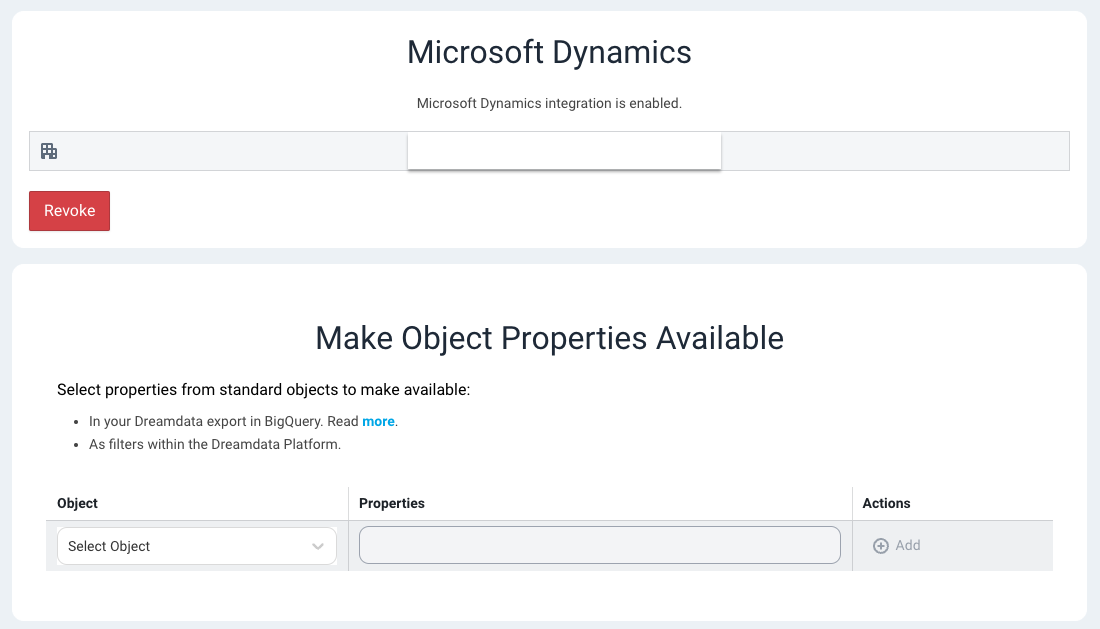
Dreamdata can connect to Microsoft Dynamics as your CRM system. This is used to collect data on your customer accounts and link it to the tracking data, thus being able to create attribution to touches in your customer journeys.
It can take up to 48 hours for the data to show in the Dreamdata Platform once you successfully integrated it.F
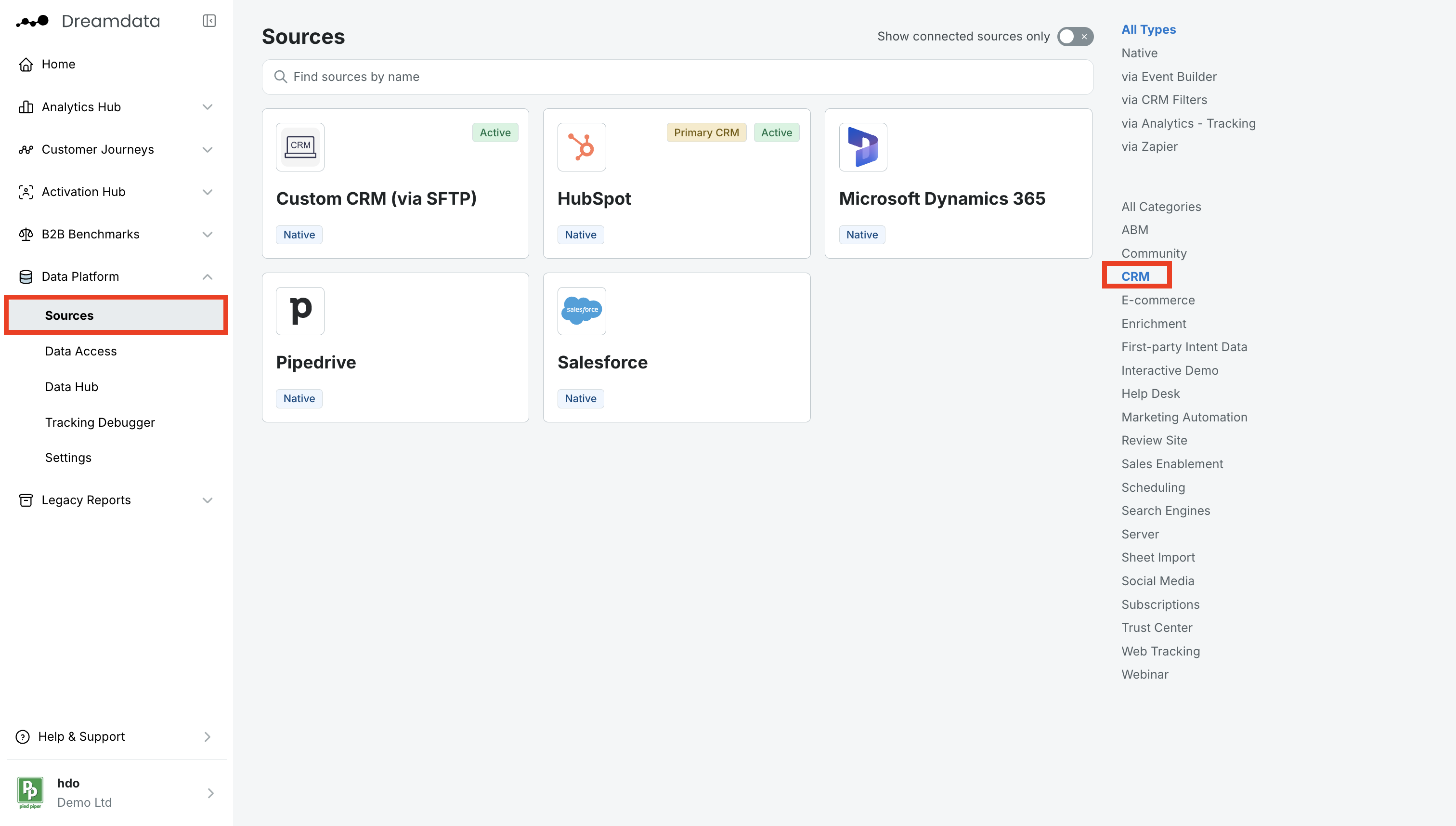
From the Sources page, find and click "Microsoft Dynamics 365" either by clicking the "CRM" category or by searching for it in the search field.
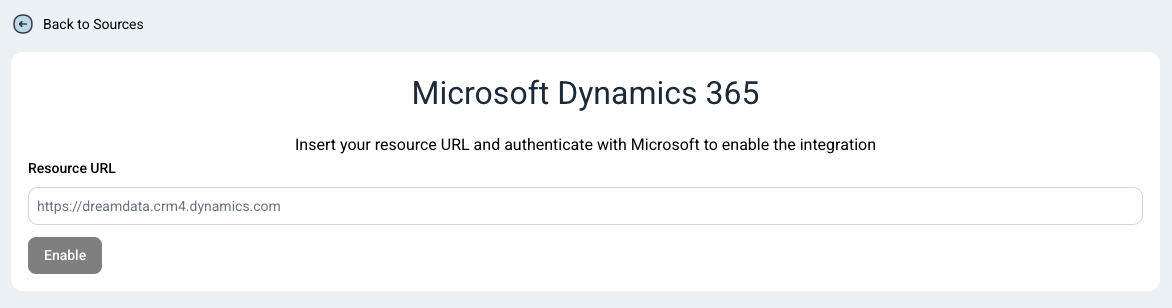
Insert your resource URL (the web address of your Dynamics 365 environment, for example https://yourcompany.crm4.dynamics.com) and click "Enable" to authenticate with Microsoft (a new tab will open).
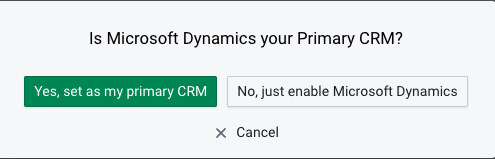
If you haven't selected a CRM system for your Dreamdata account yet, chances are that you might be prompted with the following question "Is Microsoft Dynamics your Primary CRM?". Select the option that applies to you.
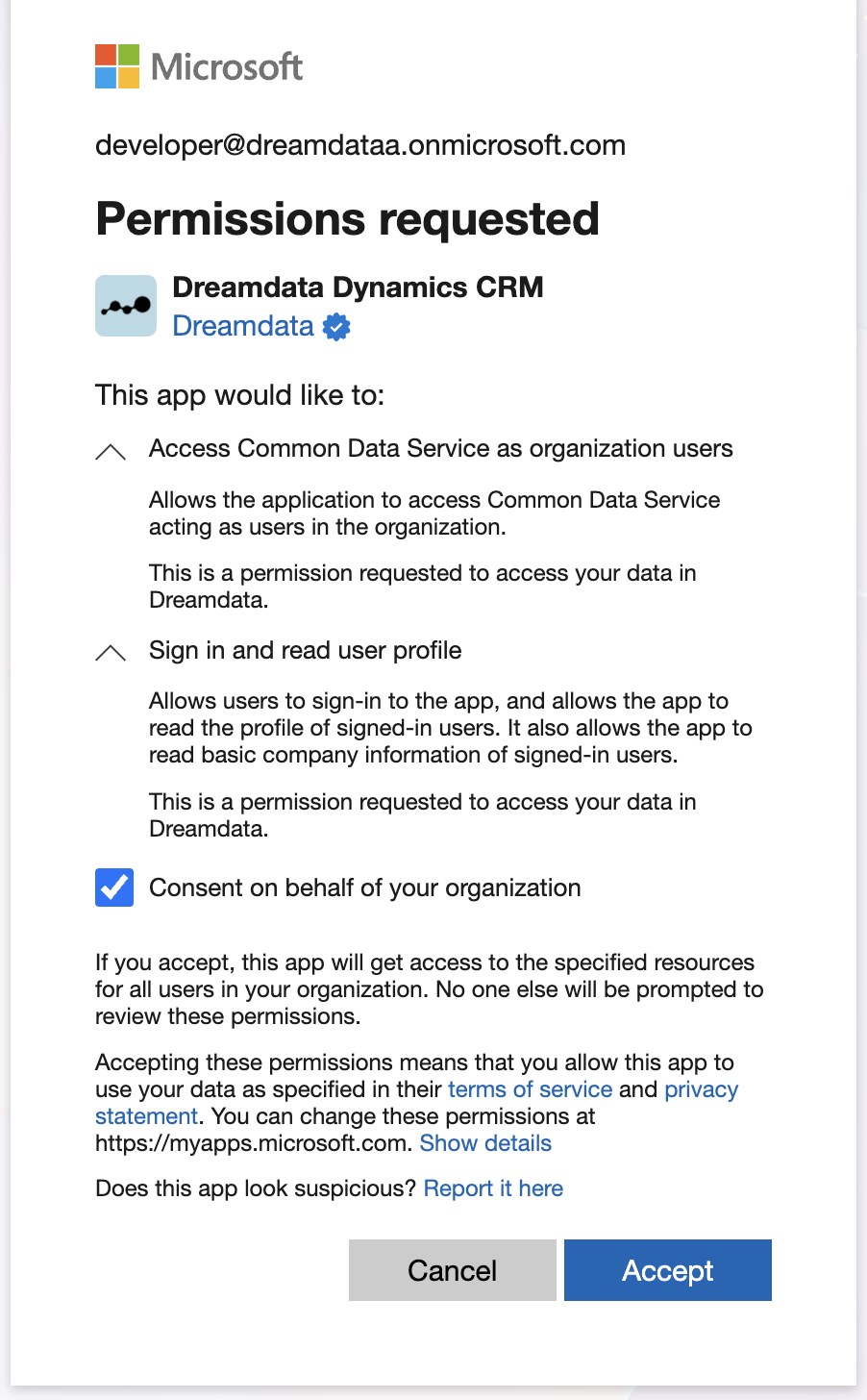
In order to proceed, you need to be signed in to your Microsoft Dynamics account. Permissions: When you authenticate to Microsoft Dynamics CRM from inside Dreamdata you will have to accept the below permissions. It enables Dreamdata to pull your CRM data such as leads, contacts, accounts and opportunities into the Dreamdata Platform. The account used for authentications needs to have access to the relevant data.Dreamdata does not send data back into Microsoft Dynamics CRM and does therefore only require read type of permissions. To be able to record lead history, opportunity history and deleted opportunities, View Audit History and View Audit Summary permissions are required for the Leads and Opportunity objects (auditing must be on for the relevant objects). Deleted opportunities will be kept in Dreamdata and field history won't be available for stage models if these permissions are not granted.
You're all set 🔥 It can take up to between 24 – 48 hours before all the historical data available for your plan begins to appear.
How will the data be mapped into Dreamdata?
Account: Your accounts will be mapped to Companies in Dreamdata. This will enable you to see all of your sales and marketing activities for each company in one place.
Contacts: Your contacts will be mapped to Contacts in Dreamdata. This will allow you to track the engagement of individual contacts across multiple channels.
Opportunity: Your opportunities will be mapped to Deals in Dreamdata. This will give you a clear picture of your sales pipeline, including the value of each deal and the stage of the sales process it's in.
Leads: Your leads can potentially be mapped to Contacts, Companies, and Deals in Dreamdata.
Calls, Meetings: Your calls and meetings will be mapped to Events in Dreamdata. These events can then be linked to specific customer journeys and applied with attributions.
Account, Contacts and Opportunity are included in all our plans, including the free one! Everything else is only available for paid plans.
What events will be included automatically into Dreamdata?
After your Microsoft Dynamics data is synced, we create the following 2 types of events and link them to relevant customer journeys automatically.
phone_call
These events will be mapped to the 'Calls' Channel and the 'Call' Source
When Event duration minutes is greater than 0.
Timestamp of these events is set with the Actual end property. If the property is not present the event will not be included.
meeting (appointment)
These events will be mapped to the 'Meetings' Channel and the 'Meeting' Source
When Event duration minutes is greater than 0.
Timestamp of these events is set with the Actual end property. If the property is not present the event will not be included.
What Microsoft Dynamics objects do we pull?
accounts
activitypointers ( where activitytypecode is phonecall or appointment)
contacts
leads
msevtmgt_events
msevtmgt_eventregistrations
opportunities
Can we restrict access to specific Dynamics entities?
We don’t support this natively, but you can limit what Dreamdata sees through the security role of the Dynamics user that makes the connection.
What permissions does Dreamdata request?
When you connect Microsoft Dynamics, Dreamdata requests one permission:
Dynamics 365user_impersonation (delegated): “Access Dynamics 365 as organization users”
This permission only applies to your own Dynamics environment (<org>.crm.dynamics.com). Dreamdata doesn’t request access to anything else in your Microsoft tenant.
Dreamdata uses the security role of the user who connects the integration. This means we can only read data that user can see in Microsoft Dynamics. Dreamdata does not send data back into Microsoft Dynamics.
Why might tenant-wide admin consent be needed?
Some organizations don’t allow users to approve apps themselves. In that case, your Microsoft admin needs to approve the permission once for the whole organization (see Troubleshoot).
Admin consent on its own does not give Dreamdata access to any data. Access only starts when a user signs in and connects Microsoft Dynamics, and Dreamdata can only see what that user can see.
Troubleshooting
Can not connect Microsoft Dynamics
If you do not see the consent screen or the following error appears in the URL bar for a short period of time:
The app is trying to access a service that your organization lacks a service principal for. Contact your IT Admin to review the configuration of your service subscriptions or consent to the application in order to create the required service principal
Solutions
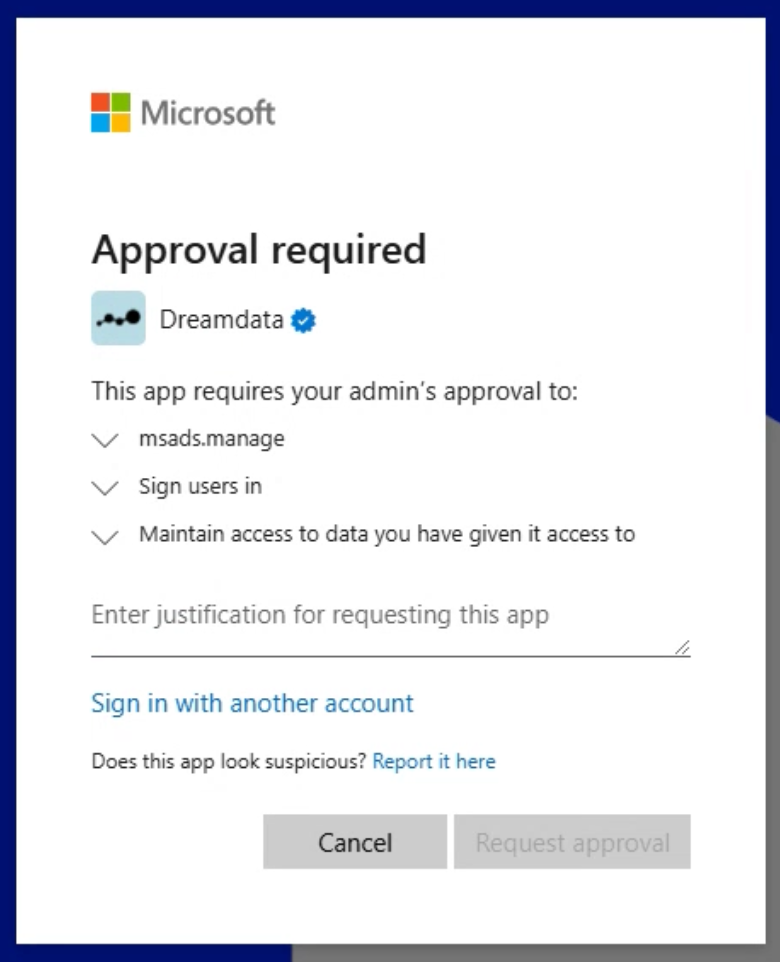
If you see the Approval Required screen when connecting:
Enter justification for requesting this app
Click Request Approval
Contact your Microsoft admin to approve your request
{organization} is the tenant ID. Find your tenant ID by following this doc
The granted permission may take some time to propagate in Microsoft's system. If you are still unable to connect after the permission has been granted, we recommend trying again after 24 hours.
We have observed rare instances where the 'Approval Required' screen continues to appear even weeks after your Microsoft admin has granted tenant-wide admin consent. This issue stems from an internal Microsoft system problem, not Dreamdata. As a temporary solution, we recommend granting your Microsoft admin email access to Microsoft Dynamics and having them connect Microsoft Dynamics to Dreamdata. This approach has proven effective. Additionally, if access expires and you need to reconnect Microsoft Dynamics to Dreamdata a few months later, you can use a different email to reestablish the connection instead of your Microsoft admin
Another solution is to invite a Gmail account to the Microsoft Dynamics platform and connect Microsoft Dynamics to Dreamdata using that Gmail account.