Setting up tracking with Segment
Dreamdata can stream tracking data from Segment if set up on your website. For Dreamdata to work you should as a minimum track page views and form submissions. And do identifies at all form submissions. You can refer to Segment's documentation here
What will you need?
- An existing Segment account.
- Admin access to your Segment workspace.
How do I integrate?
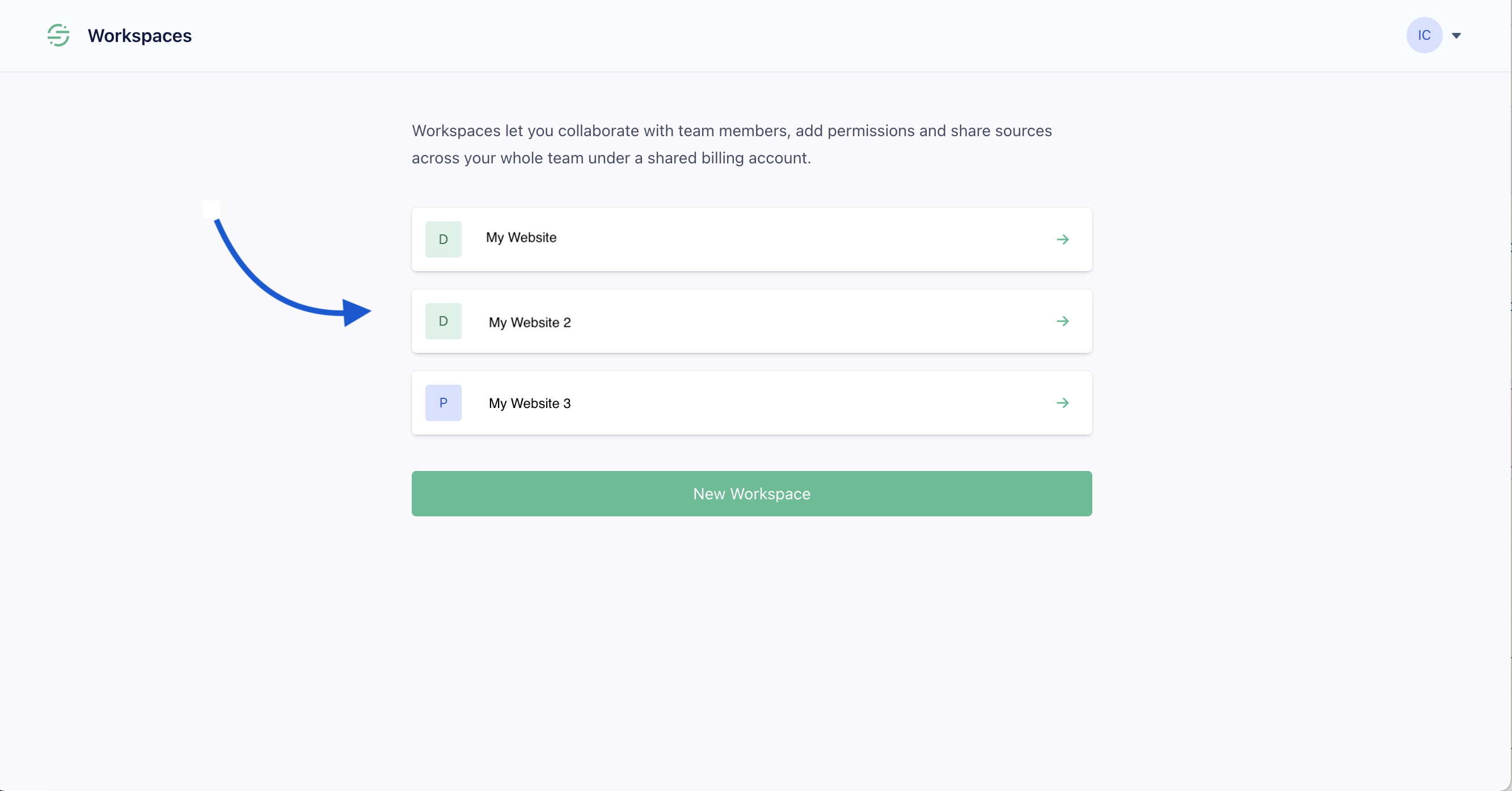
- Log into your Segment account here, and choose the relevant workspace.
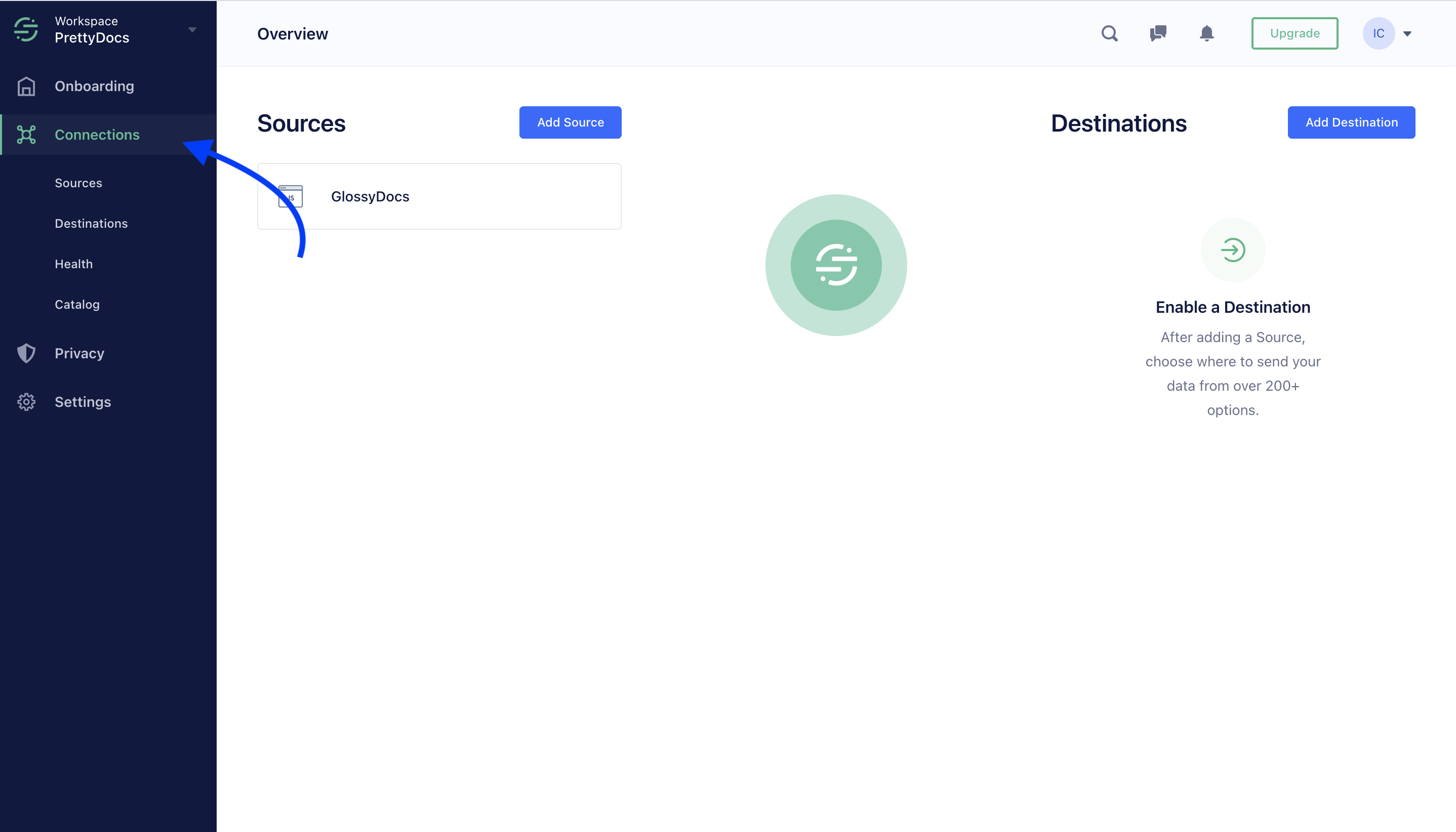
- Choose "Connections" from the menu on the left.
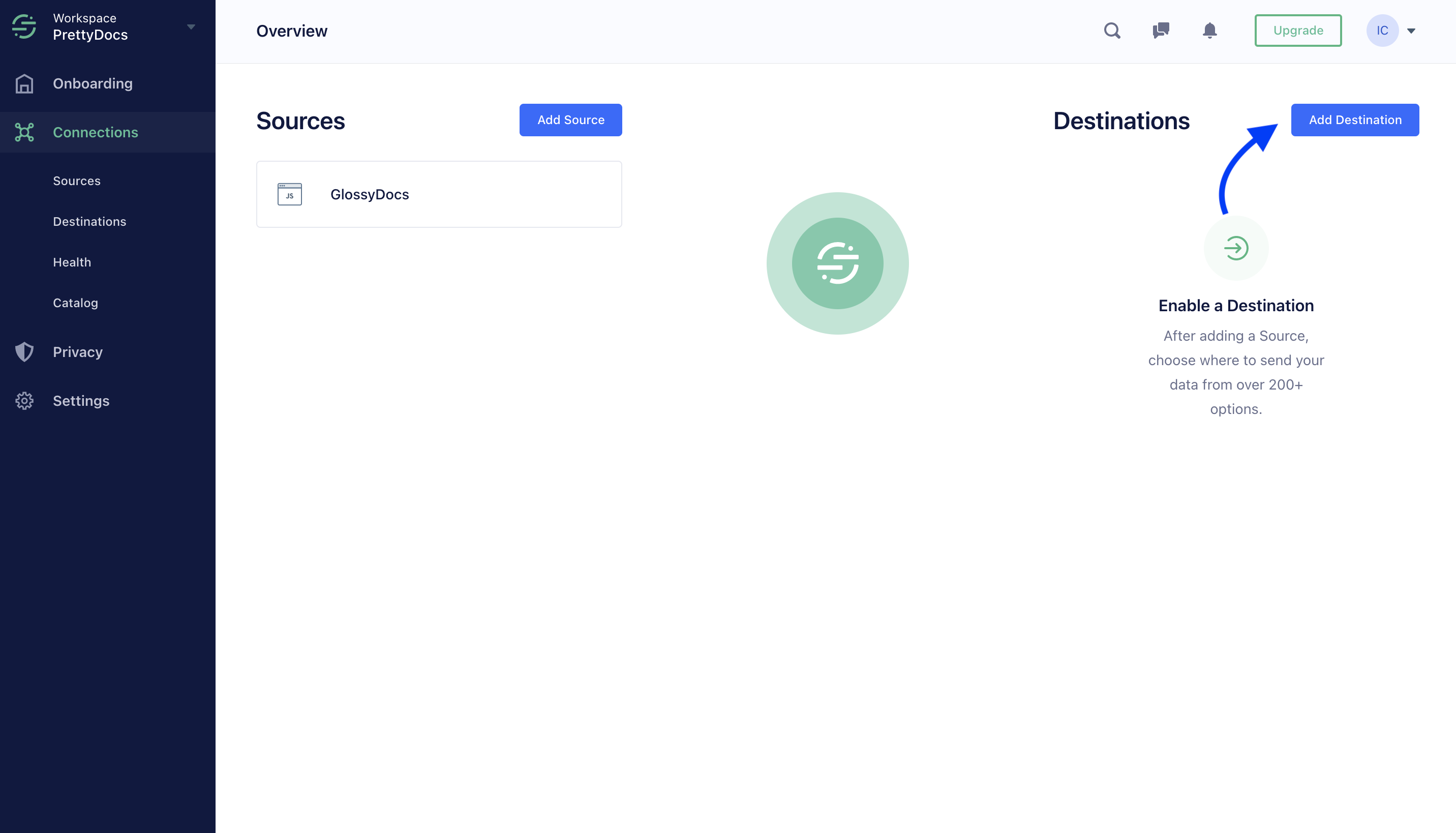
- Click on "Add Destinations" in the top right corner.
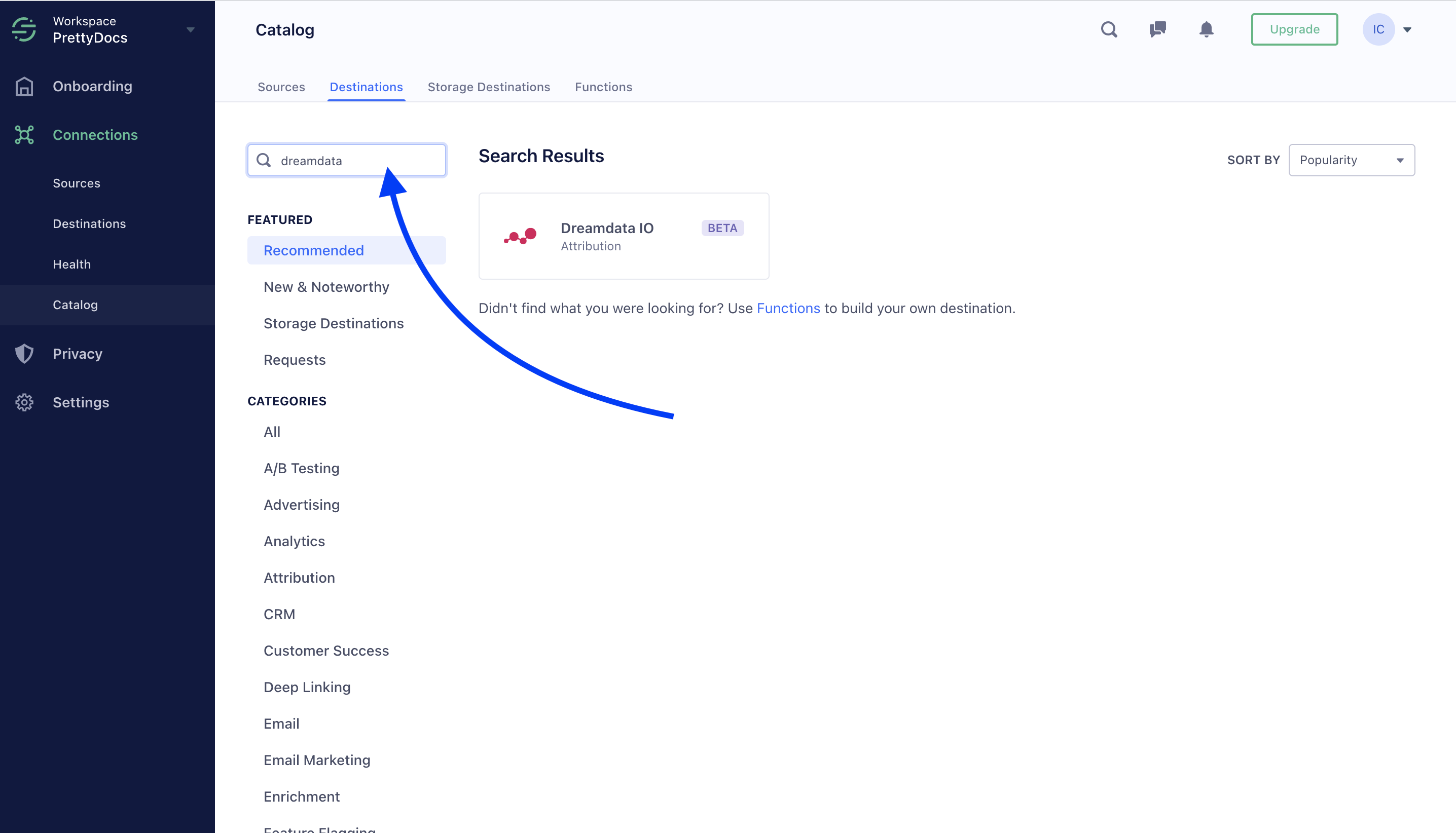
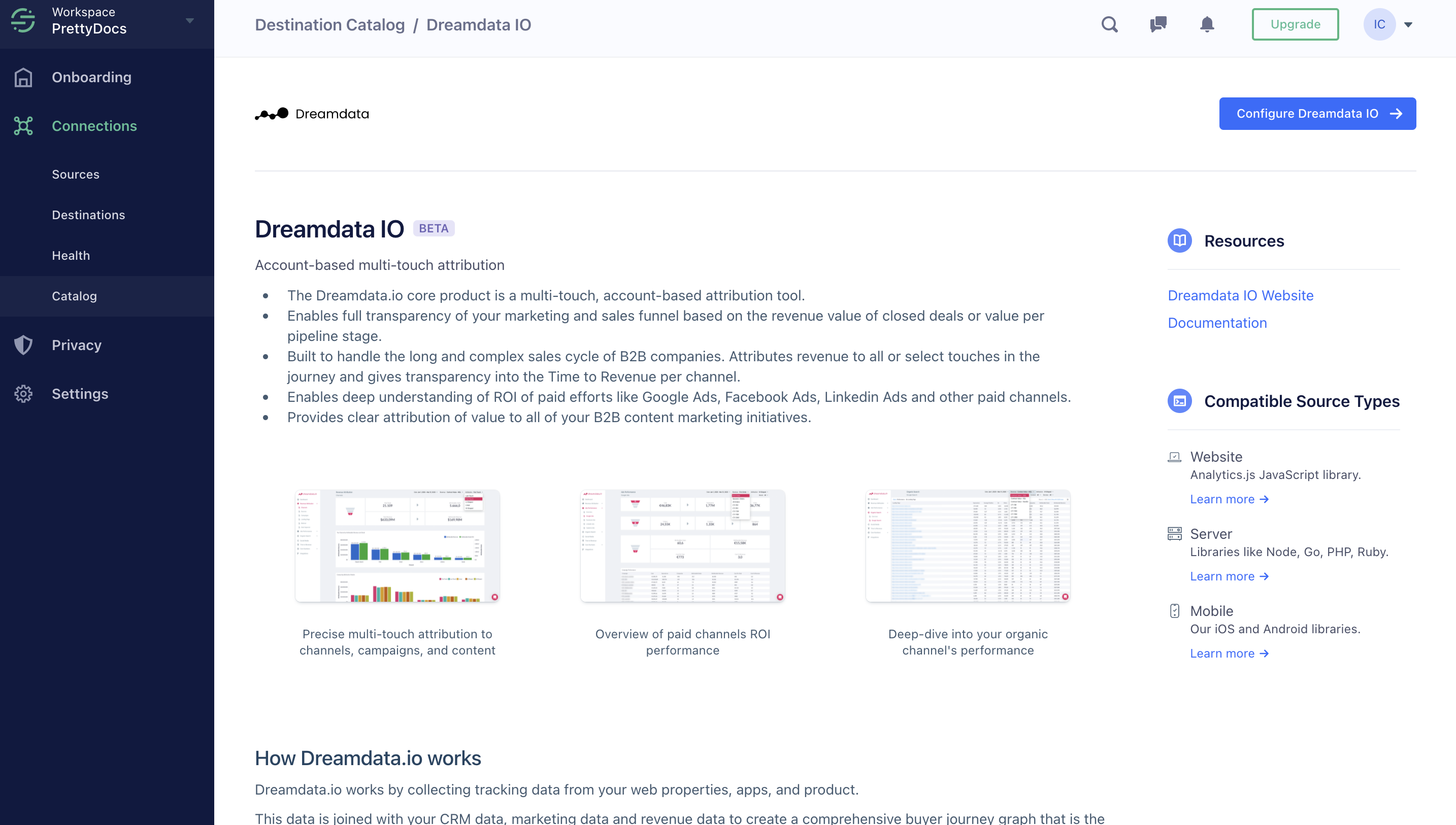
- In the search bar, look for Dreamdata and click the Dreamdata box from the results.
- On the next screen, click "Configure Dreamdata".
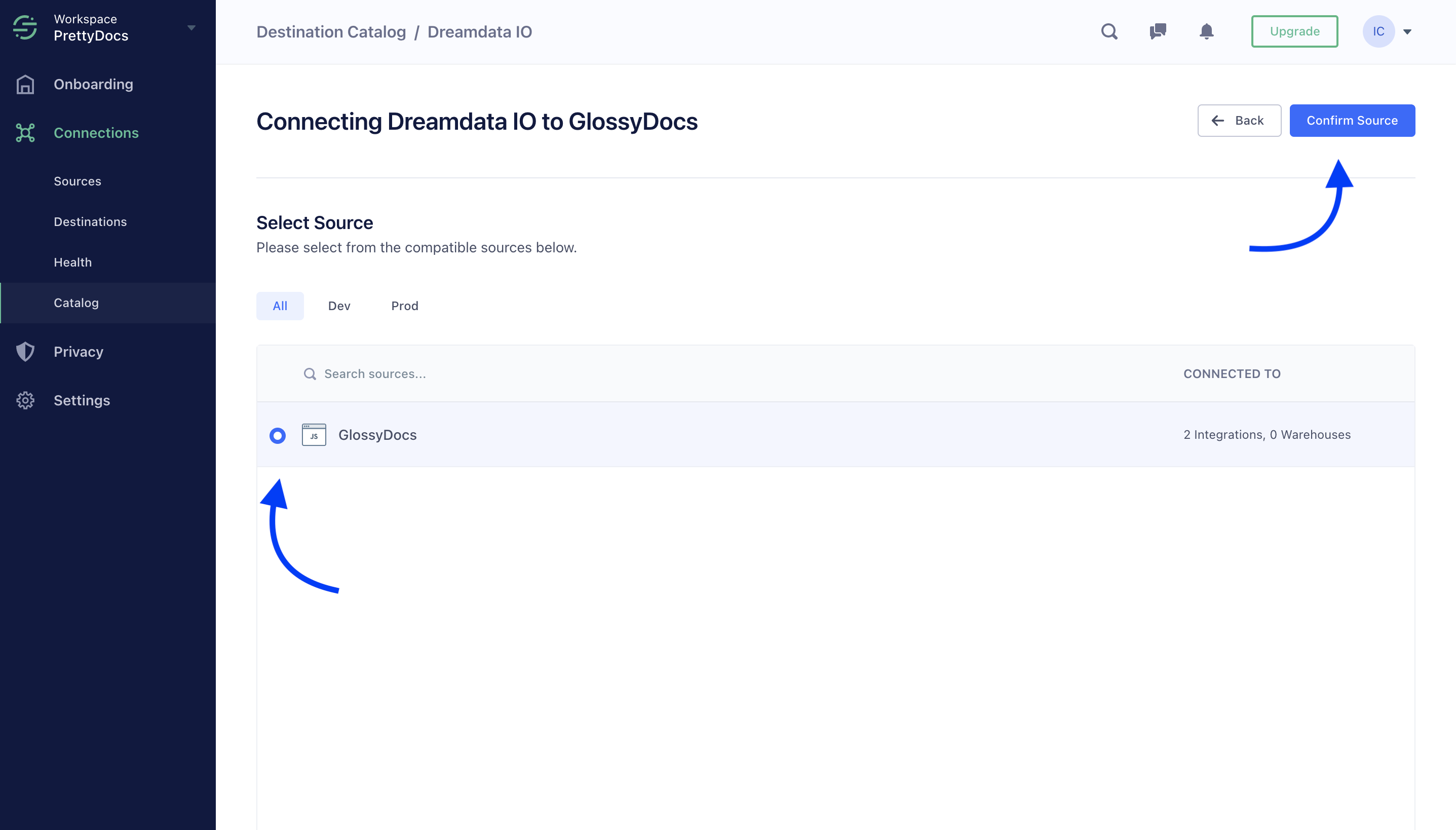
- Select your Segment source and click "Confirm source".
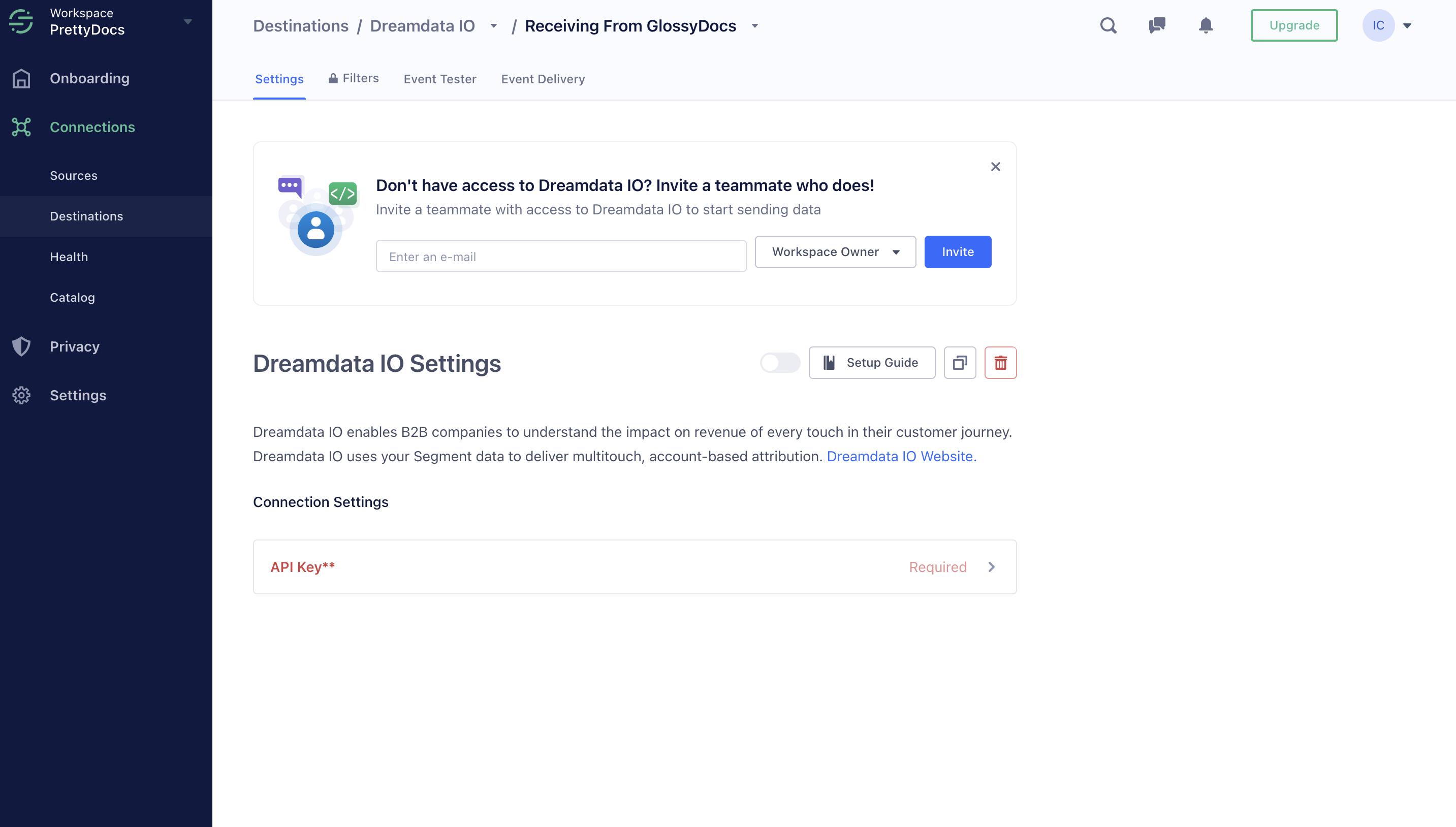
- You will now need to add a tiny piece of code called API key, which allows Dreamdata to access your Segment data securely.
Click on the API Key box at the bottom of the page.
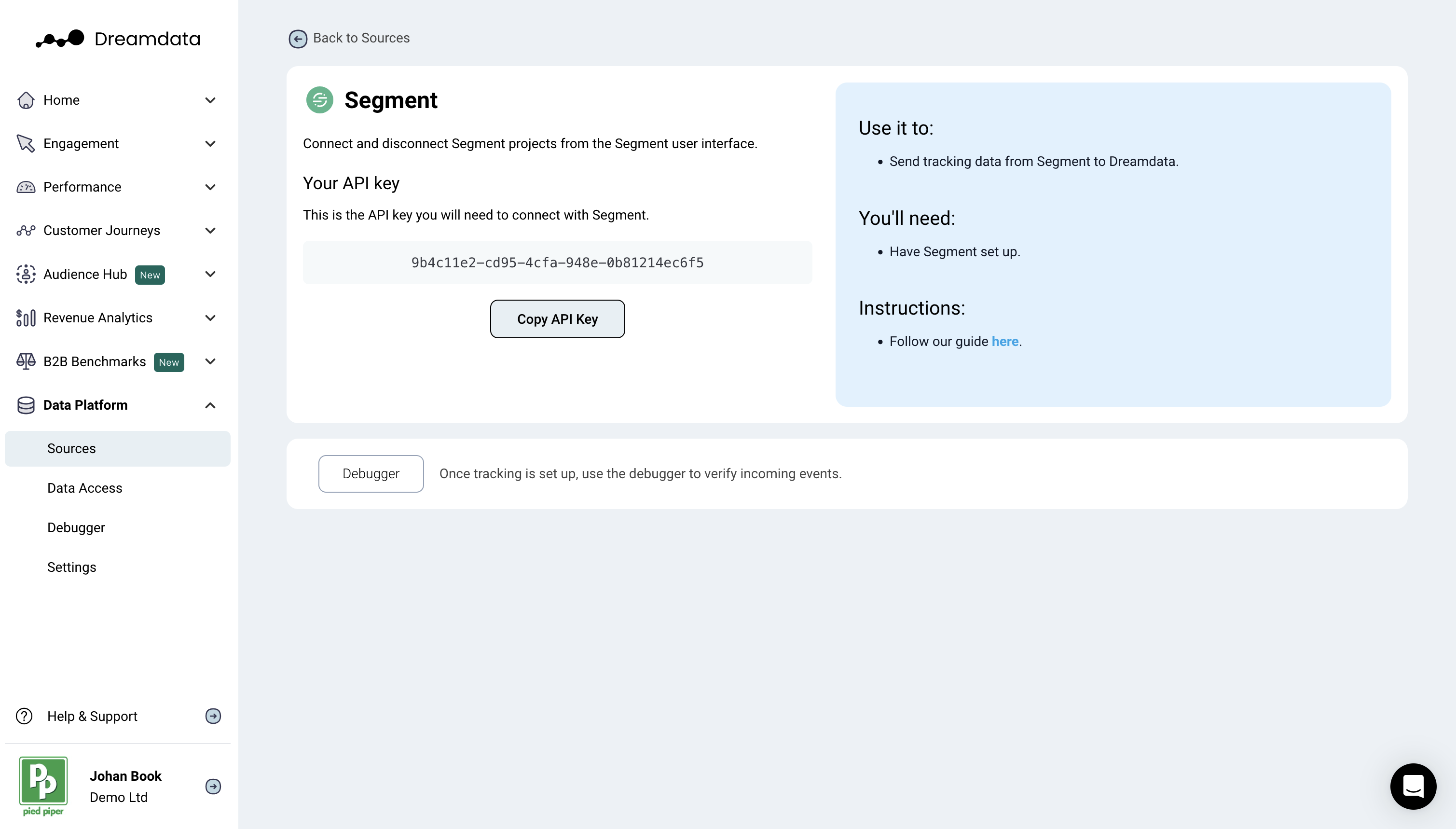
- In a separate tab, log into the Dreamdata app. Click on Data platform --> Sources --> Segment.
- In your Segment tab, click Edit and paste the API key into the box, and then click Save.
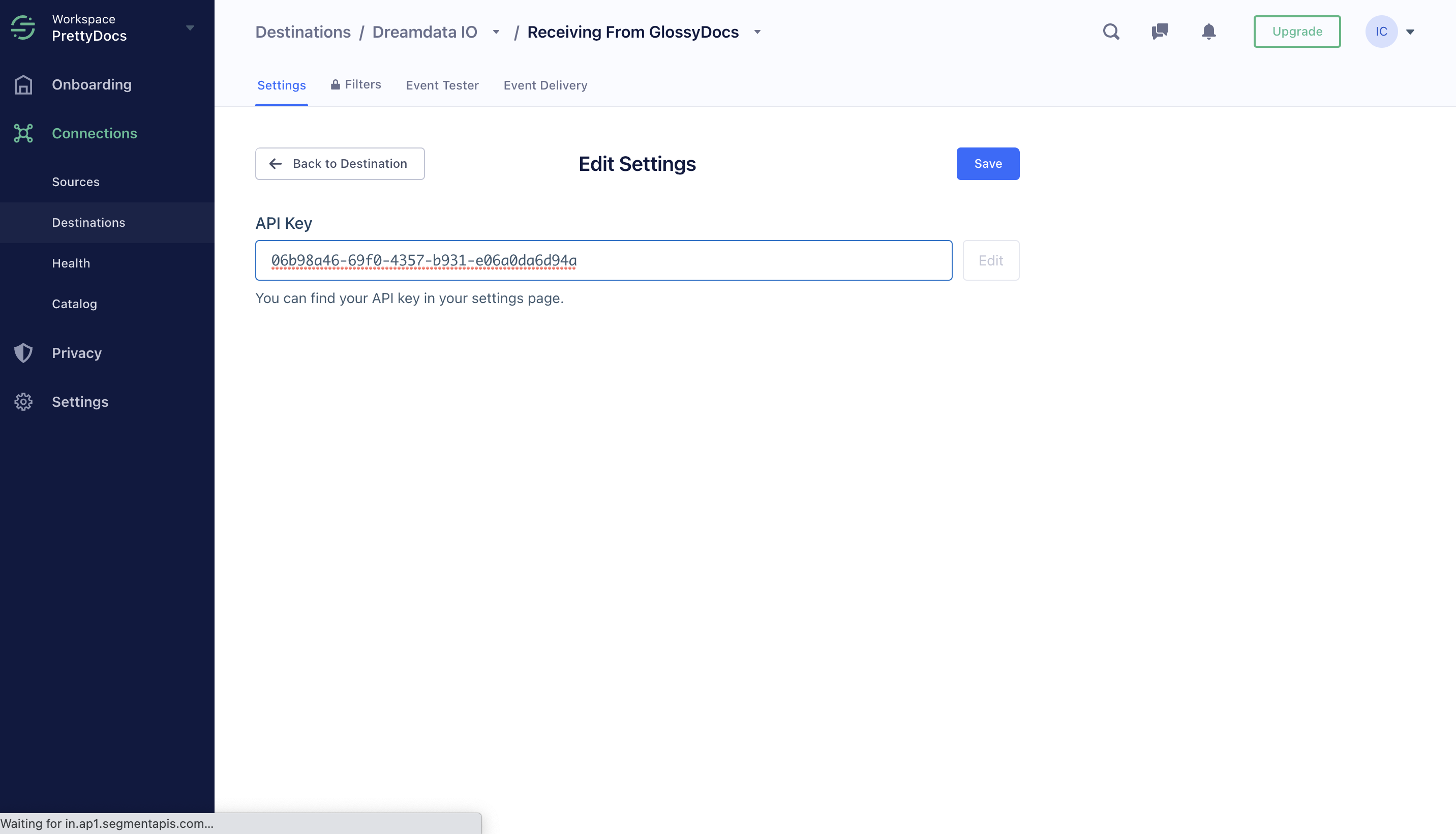
- Your Segment data should be flowing, however in some cases, it can take up to 48 hours to show.
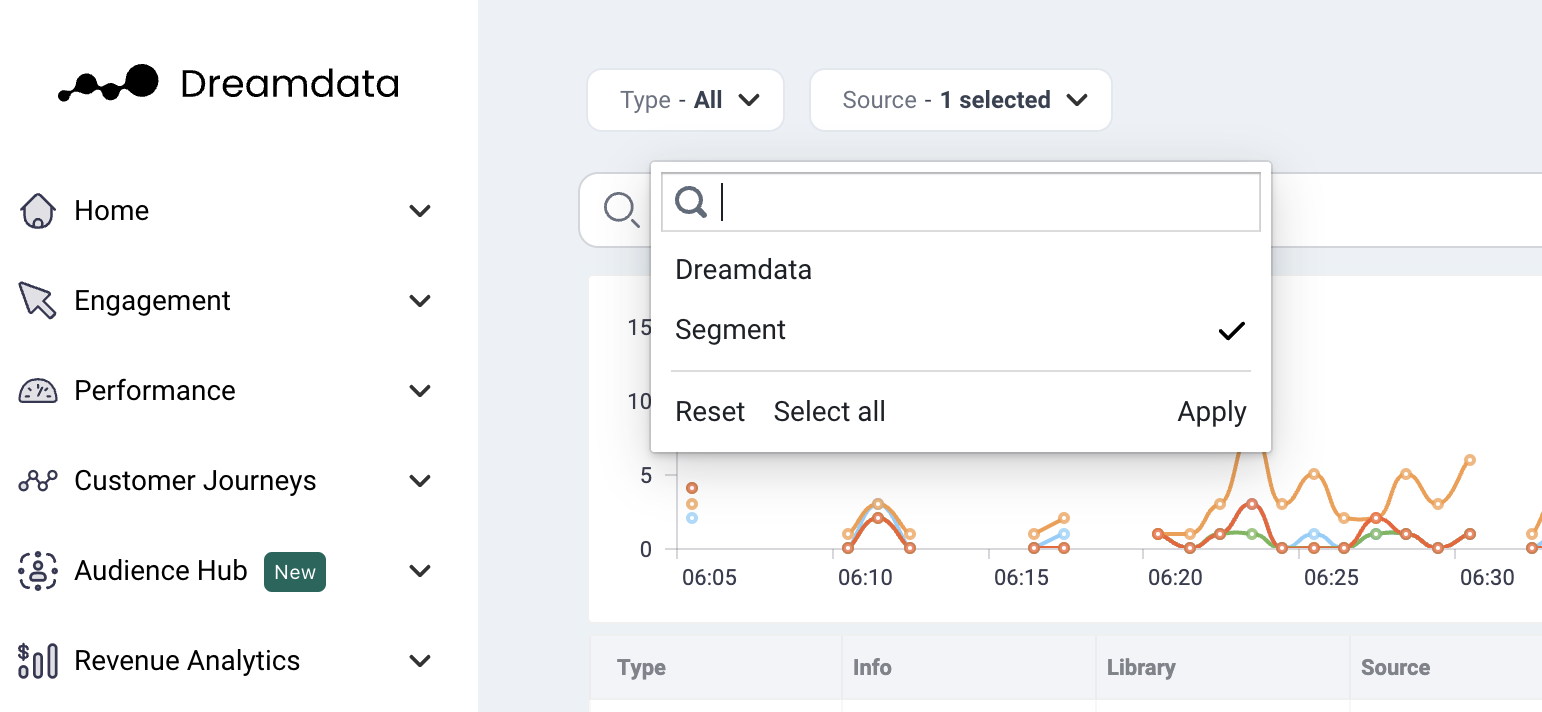
- To check whether data is streaming, in the Dreamdata app, click on Data platform --> Sources --> Debugger. In the top select "Segment" as your source. This would now show events in the table on the page.
Is your Segment tracking compatible with Dreamdata?
For Dreamdata to work correctly, your Segment implementation should include the following as a minimum:
- A Page event for every page view. This is how Dreamdata tracks website activity across the buyer journey.
- A Track and Identify event every time a user submits a form. It is essential that the email address is included in the Identify event, this is what allows Dreamdata to stitch anonymous activity to a known contact.
- A consistent anonymousId or userId across all events from the same visitor session. The
anonymousIdis used to connect pre-identification activity to the contact's journey once they identify themselves.
All three event types (Page, Track, and Identify) are required for effective attribution in Dreamdata.
How to do a historical import from Segment
If you have existing tracking data in Segment that predates your Dreamdata integration, you can bring this into Dreamdata to ensure your attribution models have full historical context, particularly important for longer B2B sales cycles.
Segment Replay
Segment offers a Replay feature that allows you to re-send historical events from your Segment source to a destination. To use this:
- Ensure your Dreamdata destination is connected in Segment (see steps above).
- Reach out to Segment support and request a Replay of your historical data to the Dreamdata destination.
- Segment will re-send your historical Page, Track, and Identify events to Dreamdata with the timestamps these occurred originall in Segment.
Note: Replays are available on Segment Business Tier plans only. Check Segment's Replays documentation for plan availability and any retention limits that may apply to your historical data.
Once the replay is complete, you can verify that your historical data has been received by navigating to Analytics Hub → User Events Report template and filtering by Data Source = analytics and the relevant date range. You should see your historical Page, Track, and Identify events appearing there.
